
Concrete Curing

Hunting humidification? Aquafog® is KING in Concrete Curing
Still using “old school” steam concrete curing? Many products cure unevenly with steam, and it’s related to where they are placed within the cure room. Steam rises when it enters a chamber, then condenses as it cools to ambient temperature. This can result in wetness up high and uneven temperatures from top to bottom. The physics of steam make the cure room’s environment difficult to control.
To gain control of conditions and even out the environment, consider using Turbo XE’s for humidification, combined with additional heat as needed. Not only will you experience more consistent concrete curing, you’ll reduce energy costs too!
It’s all about performance and reliability in this extremely harsh, high RH environment. Aquafog Turbo XE’s have been proven in curing room chambers across the country and dominate the competition.
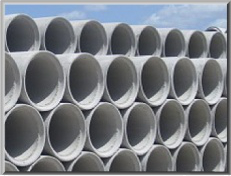 Today, it’s especially important to focus on maintaining humidity to achieve high strength concrete. Products in a 100% humidified curing chamber are able to retain their moisture, increasing chemical reaction and heat generation. In many cases, the heat generated will be sufficient to maintain the chamber’s targeted temperature range.
From concrete pipe to block, paving stones to structured shapes, Aquafog® fogging fans have taken hold of the concrete industry. Virtually any concrete curing application where fog can be contained around the product will benefit from the use of these powerful foggers.
WHY CHOOSE AQUAFOG?
Companies are choosing Aquafog’s® cool fog over traditional steam for its high efficiency and savings. Cold fog disperses more efficiently into warm air, uniformly increasing RH in minutes, resulting in superior curing in less time. In addition, Aquafog’s® initial investment cost is substantially lower and the 97% energy savings means lower operating costs.
Energy cost comparison example:
- To maintain a 20’ × 50’ chamber @ 100% RH would require about 15 gal water/hour
- 15 gal × 8 hr/day × 260 business days = 31,200 gal/year
- The cost to steam off 31,200 gal of water @ 7¢/kwh = $ 5,126.85
- The cost to atomize 31,200 gal using Turbo XE @ 7¢/kwh = $ 181.71
 Concrete Curing has a strong influence on properties of hardened concrete such as durability, strength, watertightness, wear resistance, volume stability and resistance to freezing and thawing.
Most fresh concrete contains considerably more than enough water for complete hydration of the cement; however, any appreciable loss of water by evaporation or otherwise will delay or prevent complete hydration. Since hydration is relatively rapid the first few days after fresh concrete is placed, it is important for the water
to be retained during this period, that is, for evaporation to be prevented or at least
reduced. The objectives of curing, therefore, are:
- To prevent (or replenish) the loss of moisture.
- To control the concrete temperature for a definite time.
With proper curing, the concrete will become stronger and more resistant to stress, abrasion and frost. The improvement is rapid at early ages but continues more slowly for an indefinite period.
Hydration proceeds at a much slower rate when the concrete temperature is low. Temperatures below 59°F (10°C) are unfavorable for the development of early strength; below 40°F (4.5°C) the development of early strength is greatly retarded; and at or below freezing temperatures, down to 14°F (-10°C), little or no strength develops. In recent years, a maturity concept has been introduced to evaluate the development of strength when there is variation in the curing temperature of the concrete.
The key fogging equipment used for concrete curing applications…
Concrete curing humidification – XE-2000 , XE-1500 for 50Hz, XE-1000
Humidification Small Research Testing chambers – Aquafog 700
Humidification Mid-large Research & block chambers – XE-500, XE-660 for 50Hz
Mobile Humidification – XE-HRSM


